
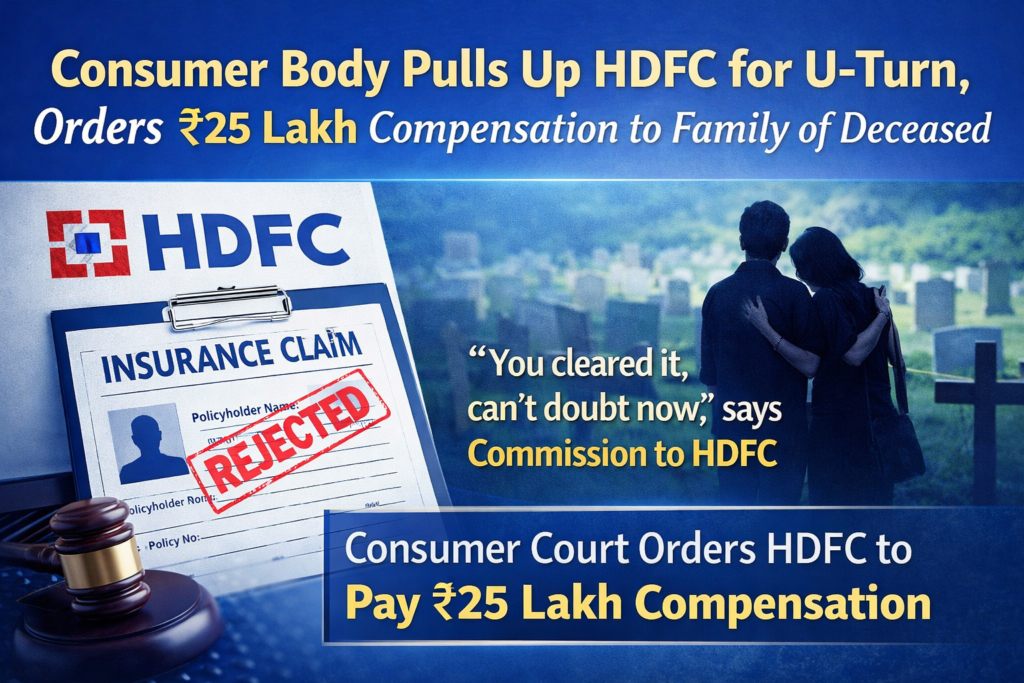
Consumer Body Pulls Up HDFC for U-Turn: In a significant ruling, India’s apex consumer dispute redressal authority has come down strongly on HDFC for allegedly taking a U-turn in its stance regarding an insurance claim. The commission directed the financial institution to pay Rs 25 lakh compensation to the family of a deceased policyholder, highlighting serious lapses in claim handling and customer service. The decision has once again brought attention to consumer rights and accountability in the insurance and banking sectors.
The case revolved around a dispute where the insurer initially cleared the claim but later denied it, leading to prolonged legal proceedings. The consumer body observed that such inconsistent actions cannot be justified, especially when they cause distress to the policyholder’s family. This landmark decision reinforces the importance of transparency, fairness, and timely claim settlement in the financial services industry.
Case Overview and Key Highlights
| Particulars | Details |
|---|---|
| Authority | Apex Consumer Dispute Redressal Commission |
| Respondent | HDFC |
| Case Type | Insurance Claim Dispute |
| Compensation Awarded | Rs 25 Lakh |
| Beneficiaries | Family of Deceased Policyholder |
| Key Issue | Claim Initially Cleared, Later Rejected |
| Verdict | Compensation Ordered with Observations |
Background of the Case
The dispute arose when the family of a deceased policyholder filed a claim under an insurance policy issued by HDFC. Initially, the claim was processed and cleared by the insurer, creating an expectation of settlement. However, the company later reversed its decision and rejected the claim, citing reasons that were contested by the claimant.
This sudden reversal led to confusion and distress for the family, who depended on the claim amount for financial support. As a result, the matter was taken to the consumer dispute redressal forum, seeking justice and compensation.
Observations by the Consumer Commission
The apex consumer body made strong observations regarding the conduct of the insurer. It emphasized that once a claim has been assessed and cleared, reversing the decision without valid justification is unacceptable.
The commission noted that such actions undermine consumer trust and violate the principles of fair practice. It clearly stated that financial institutions must act responsibly and maintain consistency in their decisions.
The authority also highlighted that delays and wrongful denial of claims can cause significant emotional and financial hardship to policyholders and their families.
Also read: Krishi Sakhi Initiative 2026
Why the Commission Ruled Against HDFC
The ruling against HDFC was based on several key factors.
The commission found that the insurer failed to provide a convincing explanation for rejecting the claim after initially approving it. This inconsistency was viewed as a serious lapse in due diligence and internal processes.
Additionally, the delay in resolving the claim and the lack of transparency were considered detrimental to the interests of the policyholder’s family. The commission concluded that the insurer’s actions amounted to deficiency in service under consumer protection laws.
Compensation and Relief Granted
The consumer body ordered Rs 25 lakh compensation to be paid to the family of the deceased policyholder. This amount is intended to compensate for both financial loss and the mental agony caused by the prolonged dispute.
The ruling also serves as a warning to financial institutions that failure to adhere to fair practices can result in strict penalties.
Such decisions play a crucial role in ensuring that consumers are protected and that companies remain accountable for their actions.
Impact on Insurance and Banking Sector
This case has broader implications for the insurance and banking sectors in India.
It reinforces the need for transparent claim settlement processes and highlights the importance of maintaining consistency in decision-making. Financial institutions must ensure that their policies and procedures are aligned with consumer protection laws.
The ruling also encourages policyholders to assert their rights and seek legal remedies in case of unfair treatment.
Importance of Consumer Rights Awareness
The case underscores the importance of consumer awareness in financial matters.
Policyholders should carefully review their insurance policies and understand the terms and conditions. In case of disputes, they should not hesitate to approach consumer forums for redressal.
The decision also highlights the role of consumer protection authorities in safeguarding the interests of individuals against unfair practices.
Lessons for Policyholders
There are several important lessons that policyholders can learn from this case.
Always keep proper documentation related to insurance policies and claims. Ensure that all communication with the insurer is recorded.
If a claim is denied without valid reasons, seek clarification and escalate the matter if necessary. Understanding your rights as a consumer can help you navigate such situations effectively.
Legal Perspective on the Case
From a legal standpoint, the case highlights the concept of deficiency in service under consumer protection laws.
When a service provider fails to deliver services as promised or acts negligently, it can be held liable for compensation. The commission’s decision reinforces the legal framework that protects consumers from unfair practices.
Such rulings contribute to strengthening the accountability of financial institutions and ensuring justice for affected individuals.
Important Links
| Description | Link |
|---|---|
| Consumer Protection Information | https://consumeraffairs.nic.in |
| HDFC Official Website | https://www.hdfc.com |
| Insurance Regulatory Authority | https://www.irdai.gov.in |
| Consumer Complaint Portal | https://edaakhil.nic.in |
FAQs About Apex Consumer Dispute Redressal Commission
Why did the consumer body rule against HDFC
The ruling was based on the insurer’s inconsistent decision to initially approve and later reject the claim without proper justification.
What compensation was awarded in the case
The commission ordered Rs 25 lakh compensation to the family of the deceased policyholder.
What is deficiency in service
It refers to failure by a service provider to deliver services as promised or expected under the law.
What can consumers do in case of claim rejection
Consumers can approach consumer dispute redressal forums and seek legal remedies if they believe the rejection is unfair.