
Health Insurance Claim Settlement Ratio: Choosing the right health insurance in India is no longer just about low premiums or big brand names. The real test of an insurer lies in how efficiently it settles claims when you need it the most. This is where the Claim Settlement Ratio (CSR) becomes a crucial factor in decision-making. Understanding this metric can help you avoid unpleasant surprises during medical emergencies.
With rising healthcare costs and increasing insurance penetration, consumers are becoming more data-driven in their choices. However, relying only on marketing claims can be misleading. This article explains the truth behind claim settlement ratios, how to interpret them correctly, and how to identify the best health insurance policy based on real settlement data.
Health Insurance Claim Settlement Ratio Overview
Here is a quick snapshot of key concepts:
| Parameter | Details |
|---|---|
| Metric Name | Claim Settlement Ratio (CSR) |
| Meaning | % of claims settled vs claims received |
| Ideal Benchmark | 95% and above |
| Source | IRDAI annual reports |
| Importance | Indicates insurer reliability |
| Limitation | Does not show claim amount paid |
What is Claim Settlement Ratio in Health Insurance
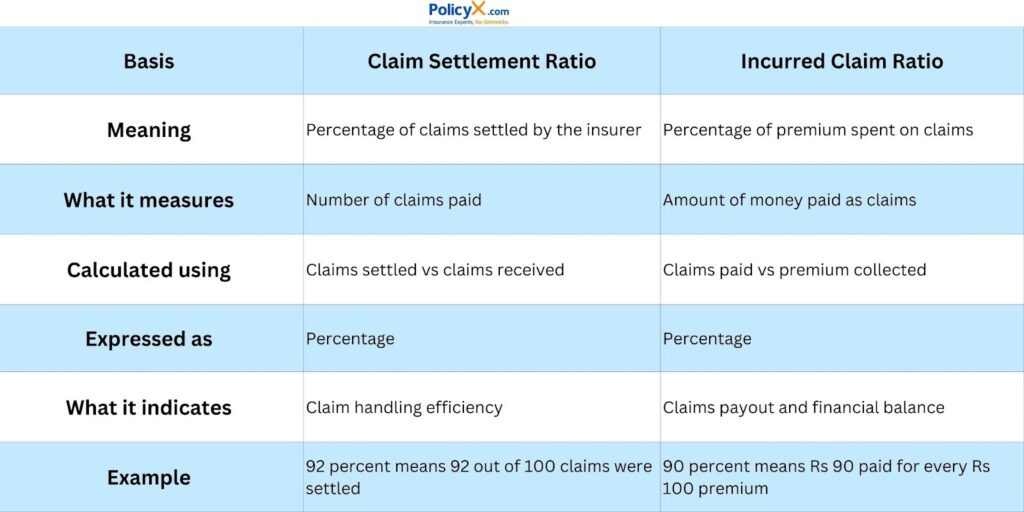
The Claim Settlement Ratio (CSR) is a percentage that shows how many claims an insurance company settles out of the total claims received in a financial year.
For example, if an insurer receives 1,000 claims and settles 970, the CSR is 97 percent. This metric is published annually by the Insurance Regulatory and Development Authority of India (IRDAI) and is widely used by customers to evaluate insurers.
A higher CSR generally indicates that the insurer is reliable and efficient in handling claims, which is critical during emergencies.
Why Claim Settlement Ratio Matters
The primary purpose of health insurance is to provide financial protection during medical emergencies. A high CSR ensures that your claims are likely to be approved without unnecessary delays.
According to industry insights, a CSR of 95 percent or above is considered trustworthy, as it reflects strong claim handling performance.
It also builds confidence among policyholders, as it indicates that the insurer has a good track record of honoring claims.
The Hidden Truth Behind High CSR Numbers
While CSR is important, it does not tell the complete story.
CSR is calculated based on the number of claims settled, not the amount paid. This means an insurer may settle many small claims but still reduce payouts for larger claims.
There are also concerns about discrepancies between high claim settlement ratios and lower payout values, which can affect customer satisfaction.
Additionally, CSR does not show how quickly claims are settled or how many are partially paid.
Other Key Metrics to Consider Along with CSR
To choose the best health insurance in India, you should not rely on CSR alone. Combining multiple metrics gives a clearer picture.
Incurred Claim Ratio (ICR)
The Incurred Claim Ratio indicates the total amount paid as claims compared to the premium collected. A balanced ICR suggests that the insurer is financially stable and not rejecting too many claims.
Claim Settlement Time
Faster claim settlement is equally important. Data shows that a large portion of claims in India are settled within a few months, with many processed through cashless mode.
Cashless Network Hospitals
A strong network of hospitals ensures hassle-free treatment without upfront payment, improving overall customer experience.
Complaint Ratio
The number of complaints against an insurer can indicate issues in claim processing or customer service.
How to Identify the Best Health Insurance in India
Choosing the right insurer requires a balanced approach.
First, look for companies with a consistently high CSR over multiple years, not just a single year’s data. Stability is more important than short-term performance.
Second, compare CSR with other metrics like ICR and claim settlement speed. This ensures that the insurer is not only settling claims but also paying fair amounts.
Third, check policy terms carefully. Factors like room rent limits, co-payment clauses, and exclusions can impact your final claim amount.
Finally, rely on official data from IRDAI rather than advertisements, as marketing figures may not always present the complete picture.
Latest Trends in Claim Settlement Data in India
Recent data indicates that insurers in India are improving their claim settlement performance.
Some companies have achieved CSR levels above 97–99 percent, reflecting strong efficiency in handling claims.
However, regulators are also focusing on improving transparency, especially in areas like claim payouts and customer grievances, to ensure better consumer protection.
Common Mistakes to Avoid
Many buyers make the mistake of choosing insurance based only on low premium or brand reputation.
Ignoring policy details, not comparing multiple insurers, and misunderstanding CSR can lead to poor decisions. It is important to evaluate all aspects before purchasing a policy.
Important Links
| Description | Link |
|---|---|
| IRDAI Official Website | https://www.irdai.gov.in |
| Health Insurance Information | https://www.policyholder.gov.in |
| Insurance Comparison Portal | https://www.policybazaar.com |
| Financial Literacy Resources | https://www.rbi.org.in |
Conclusion
The Claim Settlement Ratio is a powerful tool for evaluating health insurance companies in India, but it should not be the only factor in your decision. While a high CSR indicates reliability, it does not guarantee full claim payouts or faster processing.
To identify the best health insurance, you need to look at a combination of CSR, incurred claim ratio, claim settlement time, and policy features. Making an informed decision based on real data can help you secure better financial protection and peace of mind during medical emergencies.
FAQ’s About Health Insurance Claim Settlement Ratio
What is a good claim settlement ratio in health insurance?
A CSR of 95 percent or above is generally considered good and indicates a reliable insurer.
Is claim settlement ratio enough to choose a health insurance policy?
No, you should also consider ICR, claim settlement time, network hospitals, and policy terms for a complete evaluation.