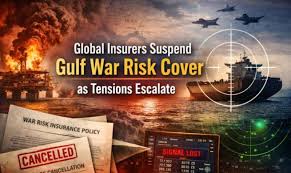
The Hidden Insurance Crisis: The global insurance industry is facing a challenge that is receiving far less attention than it deserves. As geopolitical tensions rise and war-risk premiums surge, insurers are dealing not only with market volatility but also with a deeper operational crisis inside their own organizations. The disruption in global energy markets, particularly around the strategically important Strait of Hormuz, has intensified the pressure on insurers that underwrite shipping, energy infrastructure, and international trade.
While headlines focus on rising oil prices and military tensions, insurance companies are confronting a quieter but equally serious problem. The surge in war-risk exposure, combined with rapidly changing geopolitical conditions, is forcing insurers to rethink their pricing models, risk assessments, and operational processes. This internal strain could have long-term consequences for the global insurance market and for industries that rely heavily on maritime and energy insurance coverage.
Highlights of the Emerging Insurance Crisis
| Key Point | Details |
|---|---|
| Global Trigger | Rising geopolitical tensions affecting energy and shipping routes |
| Key Location | Strategic disruptions near the Strait of Hormuz |
| Insurance Impact | Sharp increase in war-risk premiums for shipping and energy assets |
| Operational Challenge | Insurers facing internal strain in risk management and underwriting |
| Market Risk | Higher insurance costs for global trade and maritime transport |
| Industry Response | Companies reassessing risk models and operational capacity |
Rising War-Risk Premiums in the Global Insurance Market
One of the most visible impacts of the current geopolitical environment is the sudden rise in war-risk insurance premiums. War-risk insurance is a specialized form of coverage designed to protect ships, cargo, and infrastructure from losses caused by military conflict, terrorism, or political violence.
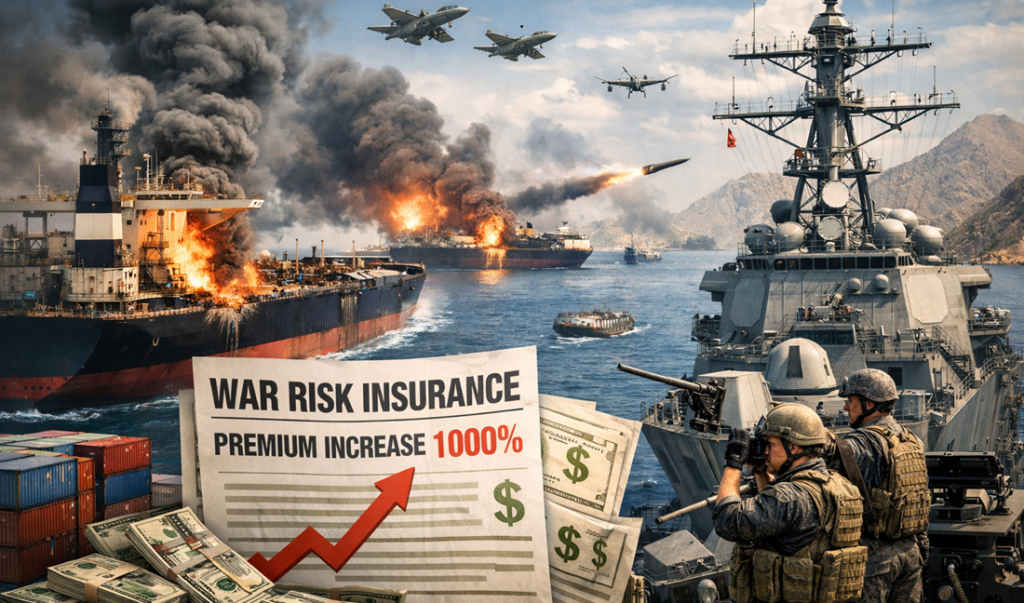
In recent months, the premiums for such coverage have increased significantly due to heightened tensions in the Middle East and concerns over potential disruptions to global shipping routes. The Strait of Hormuz, which carries a substantial portion of the world’s oil shipments, has become a focal point for these concerns.
For insurers, this surge in premiums reflects the growing likelihood of claims. Ships passing through high-risk zones require additional coverage, and insurers must calculate the probability of incidents such as missile strikes, drone attacks, or maritime seizures.
The result is a rapidly shifting insurance market where pricing must adjust quickly to match geopolitical realities.
The Operational Crisis Inside Insurance Companies
While higher premiums may appear beneficial for insurers on the surface, the internal reality is far more complex. Many insurance companies are facing operational stress as they attempt to manage the surge in risk assessments, policy adjustments, and client demands.
Insurance underwriting teams must constantly monitor geopolitical developments and update their models to reflect new risks. This process requires advanced data analysis, intelligence monitoring, and coordination with global security experts.
At the same time, insurers must ensure that their policies remain financially sustainable. A single major claim related to maritime conflict or energy infrastructure damage could lead to enormous payouts.
The operational workload associated with these risks is growing rapidly. Companies must process more risk evaluations, revise policy terms, and maintain communication with brokers, shipping firms, and energy companies operating in high-risk regions.
The Strategic Importance of the Strait of Hormuz
The Strait of Hormuz plays a critical role in global energy supply. A large share of the world’s oil exports travels through this narrow maritime corridor connecting the Persian Gulf to international markets.
Any disruption in this area has immediate consequences for global energy prices and shipping operations. Insurance companies must therefore closely monitor developments in the region when underwriting policies for oil tankers and cargo vessels.
If geopolitical tensions lead to attacks on shipping vessels or blockades in the strait, insurers could face significant claims. Even the possibility of such incidents can cause premiums to rise sharply.
Shipping companies operating in the region are already experiencing higher insurance costs, which ultimately increase the price of transporting oil and other goods.
Pressure on Risk Modeling and Underwriting Systems
Another major challenge facing insurers is the need to modernize risk modeling systems. Traditional insurance models often rely on historical data to estimate future risks. However, geopolitical conflicts are unpredictable and can escalate rapidly.
This uncertainty makes it difficult for insurers to calculate accurate premiums or determine acceptable levels of exposure.
To address this challenge, many insurance companies are investing in advanced technologies such as artificial intelligence, real-time risk analytics, and geopolitical monitoring systems.
These tools allow insurers to track global events more effectively and adjust their risk assessments as situations evolve. However, implementing such systems requires substantial investment and organizational change.
The transition toward more dynamic risk modeling is therefore adding another layer of operational complexity within insurance companies.
Impact on Global Trade and Energy Industries
The internal challenges faced by insurers are not isolated from the broader economy. Higher war-risk premiums affect industries that rely heavily on maritime transportation and energy exports.
Shipping companies must pay more for insurance coverage when operating in high-risk regions. These increased costs are often passed on to energy producers, manufacturers, and ultimately consumers.
Energy companies transporting oil and gas through strategic maritime routes also face higher operational expenses due to rising insurance costs.
In the long term, persistent geopolitical tensions could reshape global trade patterns. Companies may seek alternative shipping routes or diversify supply chains to reduce exposure to high-risk regions.
The Growing Importance of Resilient Insurance Systems
The current situation highlights the importance of resilient insurance operations capable of responding quickly to global crises. Insurance companies must balance several priorities simultaneously.
They need to maintain profitability while managing rising claims risk. They must also ensure that their underwriting decisions are based on accurate and up-to-date intelligence.
Furthermore, insurers must communicate clearly with clients about evolving risks and policy adjustments.
Achieving this balance requires a combination of technological innovation, skilled risk analysts, and strong operational processes.
Industry experts believe that insurers that successfully adapt to these challenges will emerge stronger, while those relying on outdated systems may struggle to keep up with the pace of geopolitical change.
Read about: Porsche Cayenne S Electric Revealed: 666bhp Power, 653 km Range and 0–100 km/h in 3.8 Seconds
Conclusion
The global insurance industry is confronting a hidden crisis that extends beyond rising war-risk premiums. While geopolitical tensions and disruptions in the Strait of Hormuz dominate headlines, the deeper challenge lies within the operational structures of insurance companies themselves.
Managing complex geopolitical risks requires faster decision-making, advanced risk models, and stronger internal coordination. As insurers adapt to these pressures, their ability to handle future crises will become a critical factor in maintaining stability across global trade and energy markets.
The developments unfolding today may ultimately reshape how insurers approach geopolitical risk, creating a more dynamic and responsive insurance landscape in the years ahead.
FAQs About The Hidden Insurance Crisis
Why are war-risk insurance premiums increasing?
War-risk premiums are rising because geopolitical tensions and potential military conflicts increase the likelihood of damage to ships, cargo, and energy infrastructure, particularly in strategic shipping routes.
How does the insurance crisis affect global trade?
Higher insurance costs for shipping and energy transportation can increase operational expenses for companies, which may ultimately lead to higher prices for goods and energy worldwide.